Nicotine Vape Alertnative: Nixodine
Nicotine vs. Nixodine: What’s the Difference?
For years, nicotine has been the ingredient most people associate with vaping. But a newer category of products is now appearing on the market: Nixodine, a nicotine alternative designed to provide a nicotine-like vaping experience without conventional nicotine.
For consumers, that raises some obvious questions:
What exactly is Nixodine?
Is it the same thing as synthetic nicotine?
How does it compare with nicotine?
Is “nicotine-free” the same as “risk-free”?
And where does a product such as RINN BAR fit into the picture?
Here’s what consumers should know.
First: What Is Nicotine?
Nicotine is a naturally occurring chemical compound found in tobacco. It can also be manufactured synthetically, but synthetic nicotine is still chemically nicotine.
When inhaled, nicotine interacts with nicotinic acetylcholine receptors in the nervous system. That interaction contributes to the stimulation, satisfaction and other effects people associate with nicotine use.
Nicotine is also addictive and has been extensively studied over many decades.
This is an important starting point because the phrase “synthetic nicotine” can sometimes create confusion. Synthetic nicotine isn't a nicotine alternative—it is nicotine manufactured without extracting it from tobacco.
So, What Is Nixodine?
Nixodine is marketed as a non-nicotine alternative intended to reproduce some of the sensory experience associated with nicotine vaping.
The terminology is somewhat complicated because the formulation associated with Nixodine has evolved. Earlier products marketed under the Nixodine name were associated with nicotinamide, a form of vitamin B3, while more recent formulations have involved 6-methylnicotine (6-MN), a nicotine analog. Scientific literature has documented this evolution and cautions that products carrying similar names should not automatically be assumed to contain the same ingredients.
P
PubMed Central (PMC)
+1
The current Nixodine manufacturer describes its product as a synthetic alkaloid that is not derived from tobacco or nicotine and is designed to interact with nicotinic acetylcholine receptors.
N
Nixodine Inside
That's why it's important for consumers to look beyond the words “nicotine-free.” The absence of nicotine does not necessarily mean the product has no pharmacological effects.
Nicotine vs. Nixodine: The Basic Difference
Nicotine Nixodine
What is it? Nicotine is an alkaloid found naturally in tobacco and also manufactured synthetically A newer nicotine alternative marketed under the Nixodine name
Contains nicotine? Yes Products marketed as Nixodine are formulated without nicotine
Tobacco-derived? Can be No, according to the Nixodine manufacturer
Nicotine receptors Activates nicotinic acetylcholine receptors Certain Nixodine formulations are designed to interact with these receptors
Cotinine Nicotine is metabolized to cotinine 6-MN does not produce cotinine in the same way
Research history Extensive Much more limited
Addictive potential Well established Still being investigated; manufacturers themselves warn that Nixodine may be addictive
The biggest takeaway is simple:
Nixodine isn't another name for nicotine. It is a different chemical formulation intended to produce some nicotine-like effects.
“Nicotine-Free” Doesn't Automatically Mean “Risk-Free”
This may be the most important point for consumers.
Marketing language can make “nicotine-free” sound synonymous with “safe.” Those aren't the same thing.
The University of Wisconsin Center for Tobacco Research and Intervention notes that Nixodine products containing 6-methylnicotine are designed to provide nicotine-like effects, while also pointing out that the safety profile of these newer compounds is not yet established.
U
UW-CTRI
A 2026 scientific review similarly describes emerging nicotine analogs as an area where toxicity and public-health questions remain under investigation.
P
PubMed Central (PMC)
Even the Nixodine manufacturer's own warning states that the product may be addictive and may be acutely toxic, and that its claims have not been evaluated by the FDA.
N
Nixodine Inside
That doesn't mean Nixodine and nicotine are identical. They aren't. It means consumers shouldn't interpret “no nicotine” as a guarantee of safety.
Where Does RINN BAR Fit In?
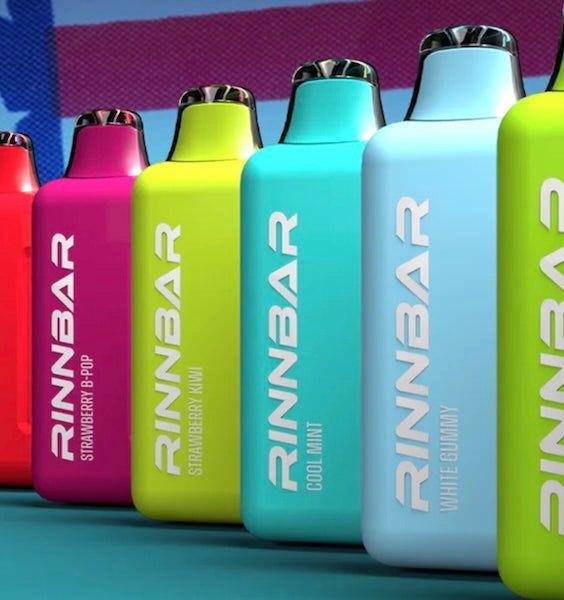
One of the brands bringing Nixodine products to consumers is RINN BAR.
According to RINN's website, the company manufactures and assembles its products in the United States and offers both conventional RINN products and Nixodine products.
R
RINN Vape
+1
The company's Nixodine lineup includes flavors such as Blue Razz B-Pop, Cola Slush, Cool Mint, Grape Slush, Juicy Peach Ice, Miami Mint, Strawberry Kiwi, Watermelon Ice and others.
R
RINN Vape
RINN also offers a 50K device with two operating modes. The company advertises up to 50,000 puffs in Eco Mode and approximately 35,000 in Boost Mode. Actual usage will vary depending on how the device is used.
R
RINN Vape
For consumers, one particularly important detail is that RINN offers both nicotine and Nixodine versions. The hardware can look similar, but the formulation inside the device is different. Third-party product information identifies the Nixodine version as using the Nixodine formulation rather than conventional nicotine.
E
eJuiceDB
That makes checking the packaging particularly important. Don't assume that every RINN BAR contains the same active ingredient.
Why Are Consumers Interested in Nixodine?
The appeal is fairly straightforward.
Someone who already enjoys vaping may be interested in a product that doesn't contain conventional nicotine while still providing a familiar inhalation experience.
Nixodine products are marketed around characteristics such as:
A nicotine-free formulation
A nicotine-like sensory experience
A smoother vaping experience
Familiar disposable-vape formats
A wide variety of flavors
For an adult consumer comparing products, those are reasonable things to investigate.
But there's another side to the equation: Nixodine is considerably newer than nicotine, so there is much less long-term human data available.
That's an important distinction that should be part of any honest consumer education.
What About Drug Testing?
Another difference consumers may encounter is metabolism.
Traditional nicotine is metabolized into cotinine, which is the primary biomarker commonly used when testing for nicotine exposure.
6-methylnicotine does not metabolize into cotinine in the same way. Consequently, a conventional nicotine/cotinine test isn't necessarily a test for exposure to Nixodine or its analogs.
U
UW-CTRI
That doesn't mean Nixodine is “undetectable.” It means a test designed specifically around nicotine and cotinine may not tell the whole story about exposure to another compound.
A Consumer's Checklist
If you're considering a Nixodine product, don't stop at the words “nicotine-free.”
Look at:
The actual ingredient/formulation. Find out what the product contains rather than relying solely on the front of the package.
The manufacturer. Look for information about who makes the product and where.
Testing information. Ask whether the manufacturer provides certificates of analysis or other testing documentation.
The intended audience. These products are marketed for adults, not youth or people who don't already use nicotine/vaping products.
The regulatory status. Don't confuse a manufacturer's statement that something is “not nicotine” with FDA approval or a determination that the product is safe.
The available science. Newer doesn't necessarily mean better—or worse—but it does mean there may be less long-term evidence.
RINN, for example, provides a product-authentication system that allows consumers to scan a QR code or enter a 16-digit security code to verify a product.
R
RINN Vape
The Bottom Line
The simplest way to understand the difference is this:
Nicotine is nicotine. Nixodine is a different compound or formulation marketed as an alternative to nicotine.
Both can be associated with nicotine-like receptor activity, but they aren't chemically interchangeable. And while nicotine has decades of research behind it, the scientific understanding of newer nicotine alternatives such as Nixodine is still developing.
For consumers looking at products such as RINN BAR, the most useful question isn't simply “Does this contain nicotine?”
It's:
“What does it contain instead, and what do we actually know about that ingredient?”
That's the conversation the growing nicotine-alternative market needs to have.
This article is intended for consumer education and is not medical or legal advice. Nixodine products are intended for adults, and consumers should review the labeling and applicable laws in their jurisdiction. Claims about safety, addiction potential, and regulatory status should be evaluated against current scientific and government information.